Choosing an injection machine in 2026 is no longer a simple comparison of price and tonnage. Manufacturers must match equipment with materials, mold design, production volume, energy targets, and service conditions. A machine that looks affordable may consume more power, require longer setup time, or create unstable parts. The real cost appears later.
John Bozzelli, founder of Scientific Molding, has said, “There are no secrets in injection molding, only information you don’t know.” His reminder remains valuable when evaluating modern equipment. A reliable decision begins with measurable facts, not impressive brochures. Check the required clamping force, shot size, injection speed, plasticizing capacity, and repeatability. Then examine the controller, hydraulic or electric system, mold protection, and available technical support.
Small details matter. A 400-millimeter mold may fit physically but still limit robot access or maintenance space. A fast cycle may also increase material stress or cooling problems. Speak with operators who have used similar machines. Their experience often reveals issues that specifications hide. It is wise to request trial data using your actual resin and mold.
Still, no selection method is perfect. Energy prices change, suppliers overpromise, and future product designs may shift. I may value all-electric efficiency today, yet a hybrid machine could suit a demanding factory better. The best injection machine balances performance, reliability, flexibility, and total ownership cost. This guide examines those factors for 2026, while leaving room for practical judgment and honest reassessment.
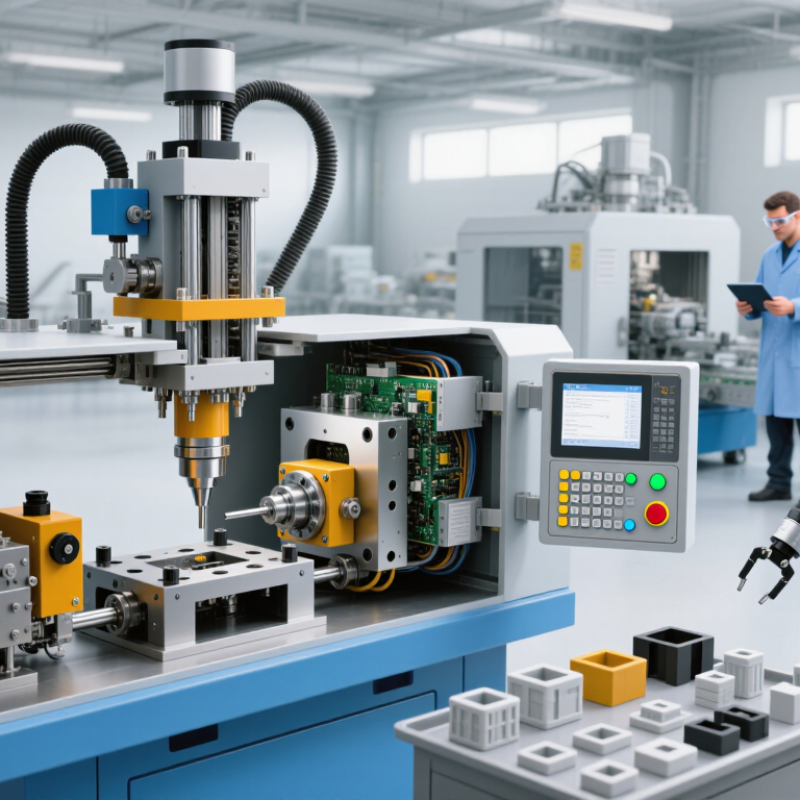
How to Choose an Injection Machine in 2026?
Establish part data before comparing machines. Measure the projected area, including every cavity, runner, and opening. Clamp force depends on this area and the material’s injection pressure. A practical starting point is projected area multiplied by 2.5 to 4 tons per square inch. Verify the result through molding trials. Thin walls and long flow paths may require more force. The Plastics Industry Association’s 2024 Size and Impact report shows that plastics manufacturing supports over one million U.S. jobs. That scale demands repeatable process planning, not guesswork.
Estimate the complete shot weight, including runners and cold slugs. Select a machine with at least 1.3 times that weight. This margin supports stable filling and protects the process from small calculation errors. Resin type also changes the decision. Glass-filled materials can increase wear and require suitable screw geometry. Heat-sensitive resins need accurate temperature control and shorter residence time. PlasticsEurope’s Plastics—The Fast Facts 2024 reports European plastics production above 50 million tonnes, showing how widely resin selection affects production planning. Still, the 1.3× rule is not universal. I would recheck it after sampling.
Tips: Record resin density from the supplier’s technical data sheet. Convert volume into mass carefully. Include moisture control for hygroscopic materials. Leave enough cushion, but avoid excessive barrel capacity. A smaller machine can sometimes mold better than a larger one. That point is easy to miss.
Choosing an Injection Machine in 2026 begins with estimating the required clamping force. A practical guideline is 2–5 tons per square inch of projected area. This area includes the product, runners, and any mold features exposed to injection pressure. Measure the mold’s largest projected outline, not only the finished part.
For example, a mold with 40 square inches of projected area may require 80–200 tons of clamping force. Many technicians begin near 3 tons per square inch, then adjust after reviewing the resin, wall thickness, injection pressure, and mold design. Higher-flow resistance, deep cavities, or difficult venting may require more force. Do not select the smallest machine that barely meets the calculation.
A suitable safety margin matters. Too little force can create flash along the parting line. Excessive force may stress the mold, increase energy use, and complicate maintenance. I have seen clean calculations fail when runners were left out of the projected area. The shortcut is useful, but not perfect. Confirm the result with actual trial data, machine specifications, and the mold builder’s recommendations. Also check tie-bar spacing, shot capacity, and platen dimensions before approval. Clamping force is only one part of the decision.
How to Choose an Injection Machine in 2026?
Choosing an injection machine starts with matching the required shot to 25–75% of barrel capacity. This range helps the screw melt material consistently and maintain better temperature control. If a part needs 80 grams, a 120-gram barrel may work after adding runners and process losses. Do not size the machine by part weight alone. Include the sprue, runners, purge allowance, and a stable cushion. A small cushion matters.
Tips: Weigh a complete molded shot, not only the finished part. Check the material’s density, because volume changes with different resins. Review the machine’s actual shot capacity, since specifications may use different measurement standards. Keep the required shot near the middle of the range when possible. It usually gives operators more adjustment room.
The 25–75% guideline is practical, but it is not a perfect rule. Fast cycles, heat-sensitive materials, and frequent color changes may require a different barrel choice. I would also check recovery time during a real production trial. A barrel can match the calculation and still recover too slowly. That is where planning needs a second look. Small errors in shot estimation can create unstable cushions, uneven filling, or unnecessary material residence time.
How to Choose an Injection Machine in 2026?
Choosing an injection machine in 2026 starts with its drive system, not its brochure cycle time. An all-electric machine uses servo motors for injection, clamping, and metering. These motors draw power mainly during movement. Traditional fixed-pump hydraulics can keep the motor running during idle periods. Servo-hydraulic systems reduce this waste through variable-speed control. EUROMAP’s energy measurement guidance supports comparing machines under identical production conditions. Industry benchmarks commonly report energy reductions of 30–70% when replacing older hydraulic equipment with electric technology.
The U.S. Department of Energy’s Industrial Motor System Market Assessment reports that motor-driven systems consume about 68% of industrial electricity. That figure explains why drive selection deserves careful attention. Measure the baseline. Record kWh per kilogram, idle consumption, cooling demand, and peak load. A machine producing 500,000 parts annually may save substantial electricity even with modest savings per cycle. However, the 70% figure is not guaranteed. Mold design, material drying, cycle time, and factory temperature can change the result. A poorly matched electric machine may waste money. Request measured data using the EUROMAP method, then verify it during a short production trial. The uncomfortable truth is that purchase price still dominates many decisions, while lifetime energy cost remains poorly calculated.
| Evaluation Dimension | All-Electric Drive | Servo-Hydraulic Drive | Conventional Fixed-Speed Hydraulic Drive | Selection Notes for 2026 |
|---|---|---|---|---|
| Typical energy use during molding | Approximately 30–70% lower than conventional fixed-speed hydraulic machines in comparable applications. | Approximately 20–50% lower than conventional fixed-speed hydraulic machines, depending on duty cycle and system design. | Highest of the three because the main pump may continue operating at substantial output during idle periods. | Actual savings depend on part weight, cycle time, holding pressure, cooling demand, machine size, and plant operating profile. |
| Energy consumption measurement | Usually assessed in kWh per kg of molded product or kWh per cycle. | Usually assessed in kWh per kg of molded product or kWh per cycle. | Often shows higher no-load and partial-load consumption. | Request measured machine-level kWh data under your actual production conditions rather than relying only on rated motor power. |
| Motion control and repeatability | Very high; direct servo control provides precise speed, position, and pressure profiles. | High; servo control improves repeatability, although hydraulic response and oil temperature remain influential. | Moderate to high; performance depends more strongly on valves, pump regulation, and oil condition. | Electric or servo-hydraulic systems are generally preferable for tight process windows and high-value parts. |
| Noise level | Generally low because there is no continuously running hydraulic pump. | Lower than fixed-speed hydraulic systems, but pump and fluid-flow noise remain. | Generally highest because the hydraulic pump may run continuously. | Consider workplace noise limits and the distance between machines and operators. |
| Maintenance requirements | No hydraulic oil circuit; routine work focuses on lubrication, electrical inspection, and mechanical wear parts. | Requires hydraulic oil, filtration, leak checks, cooling-system service, and servo-system maintenance. | Typically requires the most hydraulic maintenance because of continuous pump operation and greater heat generation. | Evaluate maintenance labor, oil disposal, filter replacement, and spare-parts availability over the machine lifetime. |
| Heat generation and cooling demand | Low to moderate; less throttling loss generally reduces heat released into the factory. | Moderate; variable-speed pumping reduces heat compared with fixed-speed hydraulics. | High; hydraulic losses can increase oil and factory cooling requirements. | Cooling-tower, chiller, and air-conditioning costs should be included in the total cost comparison. |
| Cycle-time capability | Excellent for fast, repetitive cycles when the mold and material allow high acceleration and deceleration. | Very good; suitable for a broad range of general-purpose and high-speed applications. | Good for many applications, but response and recovery can be less optimized at partial load. | Compare complete cycle time, including mold opening, cooling, ejection, and recovery—not only injection speed. |
| Clean-room suitability | Strong suitability because there is no hydraulic oil reservoir or normal hydraulic leakage risk. | Possible with appropriate design, containment, filtration, and maintenance procedures. | Possible, but hydraulic leakage prevention and environmental controls require greater attention. | Verify the required clean-room classification and machine-builder compliance documentation. |
| Typical purchase-cost position | Often the highest initial investment, especially for larger machines and advanced automation. | Usually positioned between all-electric and conventional fixed-speed hydraulic systems. | Often the lowest initial purchase cost for comparable basic specifications. | Use total cost of ownership: electricity, cooling, oil, maintenance, downtime, scrap, and expected service life. |
| Best-fit applications | Precision parts, medical components, electronics, packaging, thin-wall parts, and energy-sensitive production. | General-purpose molding, automotive components, technical parts, and applications requiring high force and flexibility. | Cost-focused production, intermittent use, robust general-purpose molding, and applications with less demanding precision requirements. | Match the drive system to annual operating hours, product quality requirements, and the required return-on-investment period. |
| Recommended decision priority | Choose when energy efficiency, repeatability, low noise, and clean operation are major priorities. | Choose when a balance of energy reduction, high force, flexibility, and purchase cost is required. | Choose when initial price is the dominant factor and operating hours or precision demands are comparatively low. | Request an application-specific energy test and compare at least five years of operating costs before selecting the machine. |
Data note: The energy-saving percentages are typical comparative ranges reported for equivalent molding applications; actual results vary with machine size, material, mold design, cycle profile, utilization, ambient conditions, and auxiliary equipment. Measurements should be verified according to a defined test method and production cycle.
How to Choose an Injection Machine in 2026?
Accuracy and safety should lead the buying decision, not the lowest quotation. ISO 20430:2020 defines safety requirements for injection moulding machines, including guarding, emergency stops, and control systems. Ask for the latest conformity documents and a witnessed safety test. Then check shot-weight repeatability, injection-pressure stability, platen parallelism, and clamp-force accuracy. Small errors can become visible flash, short shots, or rejected parts. Measure twice.
Cycle time needs evidence from your actual mould. Record filling, cooling, mould opening, ejection, and operator handling separately. A machine supplier’s advertised cycle may exclude cooling or manual loading. PlasticsEurope’s Plastics—The Fast Facts 2024 reports 400.3 million tonnes of global plastics production in 2022. At that scale, even minor scrap increases deserve serious attention. However, one trial may still mislead. Resin moisture, ambient temperature, and mould wear can change results.
Build ROI from measured production data. Include hourly energy use, maintenance, downtime, scrap, labour, and expected annual shots. The International Energy Agency reports that industry consumed about 37% of global final energy in 2023. Efficient motors and stable controls may therefore improve both cost and emissions. Compare payback under conservative, expected, and difficult conditions. A perfect spreadsheet cannot predict every mould. Require a repeatability report, energy readings, and a production run before signing.